
Step 1
Operational Site Assessment
We walk the property with the property manager, mapping drainage infrastructure, documenting equipment access, and understanding how the surface will be used at peak events.
Loading...
Service Detail
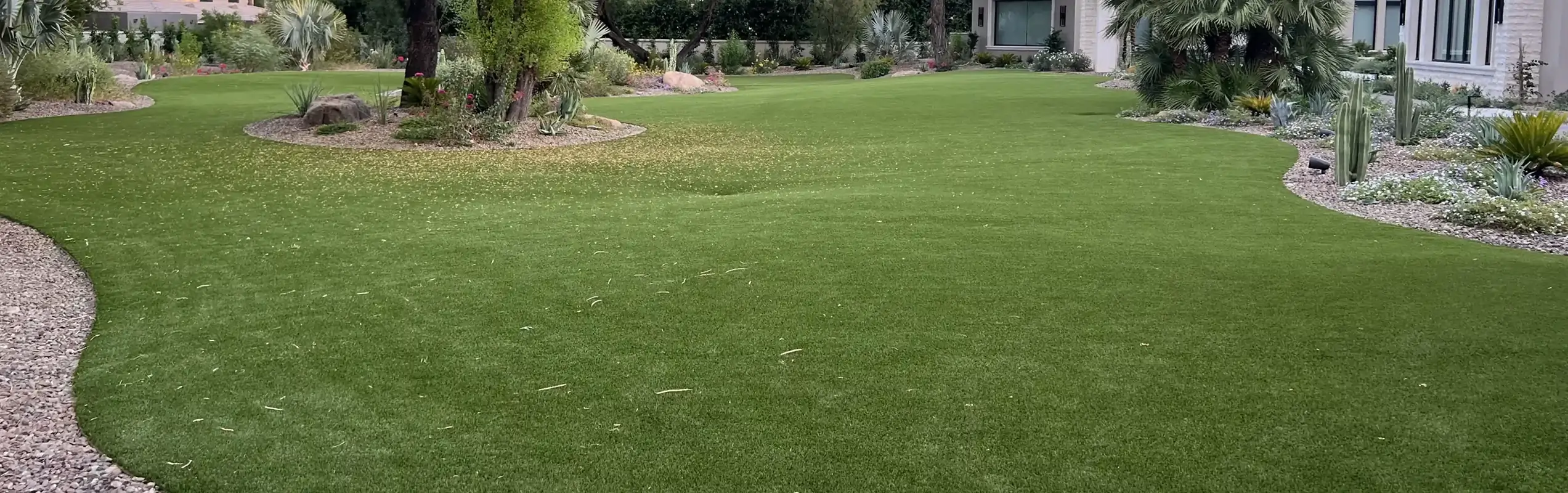
Commercial artificial turf installation for Conroe-area businesses, community properties, and managed outdoor spaces.
Main Introduction
There's a particular kind of commercial property in the Lake Conroe corridor that occupies a specific place in the regional imagination — the golf-cart-friendly resort community, the lakeside clubhouse with grounds that carry the visual weight of the club's reputation, the HOA common area that gets photographed every time someone lists a home in the neighborhood. These aren't properties where you plant St. Augustine and hope for the best. They're properties where the outdoor surface is part of the product, and its condition on any given Friday afternoon is part of what members, residents, or guests experience when they arrive.
Artificial Grass of Conroe has installed commercial turf in exactly these settings — Bentwater Country Club corridor properties, neighborhood entrance zones in Grand Harbor and April Sound, waterfront amenity areas in the communities that line the lake's shore. The installation decisions that matter in those settings are different from residential work: the drainage system has to handle volume from events, the surface has to recover from party-scale foot traffic without showing wear, and the edge treatments have to hold up to commercial maintenance equipment rather than residential lawn mowers.
Commercial artificial turf installation in the Conroe service area starts with a site walk that covers operational use — how many people, what kinds of events, what maintenance equipment is used, and how the surface interacts with irrigation, lighting, and drainage infrastructure already on-site. That operational read shapes the installation design as much as the aesthetic goals do.
The Montgomery County commercial corridor — from the I-45 hotel and office district in Shenandoah through the business parks in The Woodlands and up to the commercial development in Conroe and Willis — also has outdoor common spaces, landscape strips, and pedestrian zones that benefit from synthetic turf: no irrigation, no mowing, consistent appearance year-round, and a surface that meets the visual standards of the surrounding built environment.
What Is Included
A commercial turf installation from Artificial Grass of Conroe covers the full scope from site assessment through operational handover. We begin with a property walkthrough that maps drainage infrastructure, documents access constraints for commercial equipment, and identifies edge-transition requirements at every border with hardscape, pavers, or planted beds. That walkthrough produces a scope document that the property manager approves before any material is staged.
Base preparation at commercial scale addresses the drainage volume that commercial properties see — event crowds, irrigation overlap, high-runoff surfaces nearby — with aggregate depth and compaction standards calibrated for sustained use rather than occasional residential traffic. Seam placement is planned to minimize visibility from the primary viewing angles the property has (from the street, from the building entrance, from a terrace), and grain direction is set to look consistent from the most common sight lines.
Edge work at commercial properties includes transitions to concrete, masonry, steel edging, and in some cases pavers that get removed and reinstalled — each of those transitions requires a different technique, and commercial installers who aren't detail-oriented leave the evidence. Closeout includes a documented maintenance protocol for the property management team: brushing frequency, debris management, infill top-off schedule, and the specific seam and edge inspection points that should be checked seasonally.
Process Steps
Step 1
We walk the property with the property manager, mapping drainage infrastructure, documenting equipment access, and understanding how the surface will be used at peak events.
Step 2
Excavation, aggregate placement, and compaction are performed to commercial standards — drainage capacity for event-volume water, compaction for sustained heavy foot traffic.
Step 3
Panels are oriented for primary viewing angles, seams are placed at minimally visible positions, and grain direction is set for the sight lines that matter most on this property.
Step 4
Every border with hardscape, pavers, or structural elements gets a precision transition treatment appropriate to the material — the detail work that commercial properties are scrutinized for.
Step 5
Property management receives a written maintenance protocol and a site-specific care guide — not a generic flyer but documentation tied to the specific installation conditions.
Use Cases
Commercial turf installation in the Lake Conroe service area spans the full range of managed outdoor spaces — golf-community amenity zones, waterfront club grounds, HOA entrance features, hotel landscaping, business park pedestrian corridors, and restaurant outdoor dining surfaces.
Lake Conroe's golf-corridor communities use turf for the areas adjacent to putting greens, practice facilities, and clubhouse grounds — surfaces that see heavy foot traffic and need to look maintained under tournament-level scrutiny.
Neighborhood entrance features, pocket parks, and shared amenity zones in communities like April Sound, Bentwater, and Walden benefit from a consistent surface that holds its appearance through wet and dry seasons without irrigation cost.
Event venues along Lake Conroe's shoreline — venues that host weddings, corporate events, and club gatherings — install commercial turf for the outdoor entertaining zones that need to look perfect the day of the event regardless of the week's weather.
Business parks and commercial corridors in The Woodlands and Conroe use synthetic turf for landscape strips and pedestrian zones that are visible daily and need to meet the visual standards of the surrounding built environment.
Why Choose
Artificial Grass of Conroe brings a golf-course superintendent's understanding of how surfaces behave under use — what high-traffic patterns do to infill distribution, where drainage problems compound over time under event crowds, how edge details degrade when they're not specified correctly for the maintenance equipment the property uses. That operational knowledge, developed over years of working on real course surfaces before pivoting to synthetic installation, produces commercial work that holds up the way it's supposed to rather than looking perfect at handover and degrading within a season.
The Lake Conroe corridor community is small enough that our commercial clients see the work we've done at adjacent properties. The Bentwater entrance feature is visible to every Grand Harbor resident who passes it. The club grounds in one April Sound community are photographed by every homeowner listing their property. That visibility creates a standard we hold ourselves to.
Commercial project management with Artificial Grass of Conroe is straightforward: a scope document before any work starts, a clear installation schedule, site-specific maintenance documentation at handover, and a contact process for follow-up that doesn't require the property manager to track down a crew through a general inquiry line.
Pricing Factors
Commercial installation pricing reflects the difference between commercial-scale base preparation and residential work — the aggregate depth, compaction standards, and edge-transition complexity that commercial properties require add meaningful cost over a residential specification. We produce detailed scope estimates that itemize the base preparation, turf material, and installation phases separately so the property manager understands what each line represents.
Service Area Coverage
Commercial artificial turf installation is available throughout the Lake Conroe service area, including Bentwater, Grand Harbor, April Sound, Walden on Lake Conroe, The Woodlands, Conroe, Shenandoah, and the I-45 corridor commercial district. We confirm routing and logistics during the site assessment phase so installation scheduling aligns with property access requirements.
Related Services
Frequently Asked Questions
Yes — a significant portion of our commercial portfolio is in the Bentwater and Lake Conroe golf-corridor communities, where the surface standards are set by the proximity to championship course grounds.
Yes. We stage the installation to minimize disruption — phased zones, after-hours work when access allows, and daily cleanup that keeps the property functional through the project.
We provide specific guidance at handover — the brush type, the frequency, and any equipment that should not be used. The maintenance protocol is written for the specific installation, not a generic document.
We map existing irrigation during the site walkthrough and design the installation to work with or around it — turf drainage and irrigation need to be compatible, not competing.
Yes. Multi-property management relationships are something we plan for — consistent specifications across multiple addresses, documented standards that can be maintained by your property team.
Yes. The coverage area covers the full Lake Conroe corridor and the I-45 commercial district from Shenandoah through Willis — route and logistics confirmed during site assessment.
Final CTA
Submit the form with service type, property address, and timeline details. You can also call directly for scheduling support.
Call