Step 1
Pet-Use Site Assessment
We assess the existing yard's condition in relation to pet use — identifying contamination depth, drainage problem areas, and the specific zones that require different base specifications based on use intensity.
Loading...
Service Detail
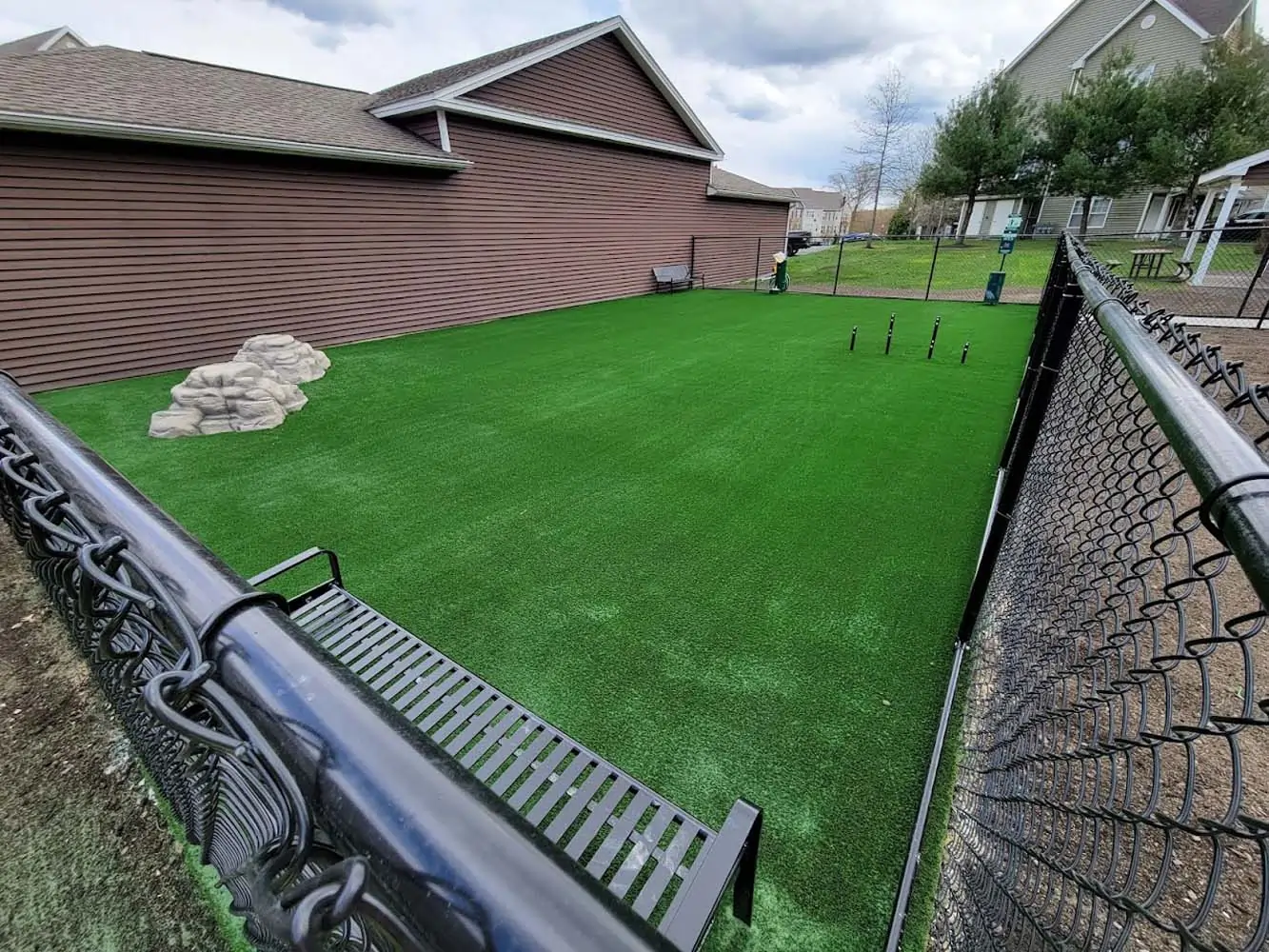
Artificial turf designed for dogs and other pets — antimicrobial infill, drainage-first base design, and the odor management that actually works in the Gulf Coast climate.
Main Introduction
Lake Conroe and the Montgomery County corridor is dog country. There are Labs who ride in the boat and Labs who wait at the dock, retrievers and pointers and mixed-breeds who have been claiming the backyard since the family moved in. And in every neighborhood from April Sound to The Woodlands, there's the same story playing out: the backyard that used to be a lawn is now a collection of compressed dirt paths, bare zones along the fence where the dog runs the perimeter, and the area near the back door that's more mud than grass after any meaningful rain.
Pet-friendly artificial turf installation is a service we've refined over years of working in exactly this climate — the Gulf Coast humidity that makes organic material decompose faster, the lake-adjacent moisture that creates a more challenging odor-management environment than a drier region, and the yard-use intensity that comes from multiple large dogs in an active family's outdoor space. The installation approach we use for a pet-focused yard is meaningfully different from a decorative lawn installation — not just in materials but in drainage design, excavation depth, and the antimicrobial infill choices that determine whether the surface stays fresh or becomes a problem by summer.
The honest conversation about pet turf starts with this: the most important decision in a pet-use installation isn't the turf selection — it's the sub-base preparation and drainage design. A beautiful turf surface installed over inadequate drainage in a climate as humid as ours will accumulate odor no matter what infill the salesperson recommended. The drainage system is the odor management system. Everything else is secondary.
For the dog-owning family at Bentwater who wants to stop apologizing to guests about the yard, or the Willis homeowner with three rescue dogs who has re-sodded twice in four years and calculated that the cost is unsustainable — the math on a properly installed pet-friendly surface is usually straightforward once the installation approach is explained correctly.
What Is Included
Pet-friendly artificial turf installation from Artificial Grass of Conroe starts with an excavation and drainage assessment that goes deeper — literally and figuratively — than a standard residential installation. In high-pet-use zones, we excavate through the organically contaminated upper soil layer rather than installing over it. The contaminated layer is a moisture-and-odor reservoir that no infill choice can fully remediate if it's left in place beneath the installation.
The base aggregate specification for pet-use installations prioritizes permeability — the drainage rate through the aggregate and the backing needs to move liquid faster than the use rate produces it, which is a different specification than a low-traffic decorative lawn installation requires. We calculate the drainage capacity relative to the pet-use intensity and specify accordingly.
Infill selection for pet-focused yards includes antimicrobial properties that reduce the bacterial load that creates odor. In our Gulf Coast environment, where temperatures and humidity create an ideal breeding environment for odor-producing bacteria, the infill specification matters more than in drier climates. We discuss the available options — silica sand with antimicrobial coating, zeolite infills, and compound specifications for high-intensity use — and recommend based on the specific dog count, breed size, and yard use pattern.
The finished installation includes edge treatments that allow routine hosing-down to flush the drainage system effectively, and a care protocol that tells the homeowner exactly what the surface needs on a weekly, monthly, and seasonal basis to stay fresh.
Process Steps
Step 1
We assess the existing yard's condition in relation to pet use — identifying contamination depth, drainage problem areas, and the specific zones that require different base specifications based on use intensity.
Step 2
High-use zones are excavated to a depth that gets below the organically contaminated soil layer. The excavation depth is determined by what we find, not by a standard assumption.
Step 3
Aggregate type, depth, and compaction are specified for the drainage rate the pet-use intensity requires — not the standard residential specification applied to a different use scenario.
Step 4
Turf is placed with grain direction that allows effective hosing and flushing, and infill is distributed with concentration adjusted for the highest-use zones.
Step 5
The homeowner receives a pet-specific care guide that covers routine flushing, spot cleaning, seasonal deep cleaning, and the infill replenishment schedule that keeps the antimicrobial properties effective.
Use Cases
Pet-friendly turf installations throughout the Lake Conroe service area serve single-dog families who want a clean surface, multi-dog households where the yard has become unmanageable, and lake-house properties where the combination of outdoor-indoor dog movement and lakeside humidity creates an especially demanding odor-management challenge.
The household with three or four dogs where the backyard has been stripped to bare soil on the fence lines and in the entry zone. The re-sod cycle has been tried twice and failed. A pet-specific installation with contamination-depth excavation and antimicrobial infill resolves all three problems — bare soil, mud, and odor — simultaneously.
The lake-house property at Bentwater or Walden where the family brings their dog every weekend, and the lakeside humidity means that organic material in the yard decomposes faster than anywhere else. Proper drainage and antimicrobial infill are especially important here.
A new dog's first year can do serious damage to a traditional grass yard. Installing a pet-friendly surface before the damage accumulates is far less costly than remediating after a year of puppy activity.
Older dogs benefit from a consistently soft, stable surface that doesn't turn hard and rutted in dry spells or slippery in wet ones. A properly installed synthetic surface with cushioned base provides a consistent underfoot experience for dogs with joint or mobility considerations.
Why Choose
The Gulf Coast climate creates odor management challenges that installers from drier regions haven't encountered at the same intensity. The combination of heat, humidity, and year-round biological activity means that an installation that performs well in Denver or Phoenix may fail the nose test in Conroe by late July. We specify for the actual climate, which means higher drainage rates, more aggressive antimicrobial infill, and a more thorough excavation approach than a template-applied installation would produce.
The contamination-depth excavation philosophy is the specific thing that differentiates our pet installations. Many installers install over contaminated soil and rely on infill to manage the odor that the soil below will continue to generate. We remove the source. That approach costs more in excavation labor — and it's the reason installations we do for multi-dog households stay fresh through their third and fourth year instead of requiring an odor intervention.
We've done enough Lake Conroe-area pet installations to have done follow-up conversations several years after project completion. The feedback from those conversations is what shaped the installation protocol we use now — the excavation depth, the drainage specification, the antimicrobial infill choice. It's practice-informed rather than catalog-informed.
Pricing Factors
Pet-friendly installation pricing varies significantly based on the contamination situation we find. A first-dog installation on a yard that hasn't been damaged yet prices closer to a standard residential installation; a heavily contaminated multi-dog yard that requires deep excavation through the organic layer prices higher because the scope is genuinely larger. We assess the contamination situation during the site visit and price accordingly — not by formula.
Service Area Coverage
Pet-friendly artificial turf installation is available throughout the Lake Conroe service area, including all Montgomery County communities, The Woodlands, Spring, Tomball, Porter, New Caney, and Huntsville. Climate and drainage conditions across this area are consistent enough that our standard protocol applies; pet count and yard contamination situation are what drive the site-specific adjustments.
Related Services
Frequently Asked Questions
For multi-dog yards where sod has failed multiple times, yes — if the installation is done correctly. The correct approach means excavating through the contaminated soil layer, not installing over it.
The drainage design and excavation depth. The antimicrobial infill matters, but it can't remediate odor that's being continuously generated by contaminated soil left beneath the installation.
A properly installed surface — adequate drainage rate, contamination-depth excavation where needed, appropriate antimicrobial infill — should stay fresh. We specify for the Gulf Coast climate specifically, not for a drier region.
Routine flushing with a hose is the primary maintenance task for pet zones. The care protocol we provide covers the flushing frequency, spot cleaning approach, and the seasonal deep-clean timing that keeps the antimicrobial infill performing.
With the right cushioned base specification, yes. Senior and mobility-limited dogs benefit from a consistent underfoot surface that doesn't harden in dry spells or soften to mud in wet ones.
Final CTA
Submit the form with service type, property address, and timeline details. You can also call directly for scheduling support.
Call